NVIDIA H200 vs H100 vs L40S: A Decision Matrix for AI Infrastructure
Choosing the right NVIDIA GPU depends on how your workload behaves. High-performance AI infrastructure doesn’t have to be expensive. But it does have to be intentional.
If you’re deploying mature AI applications for customer-facing use, the wrong GPU can mean:
- Overpaying for unused capacity
- Hitting memory ceilings during training
- Latency instability during inference
- Inefficient scaling across clusters
At HorizonIQ, we deploy NVIDIA-powered small to mid-sized GPU clusters in single-tenant environments at up to 50% lower cost than major public cloud providers.
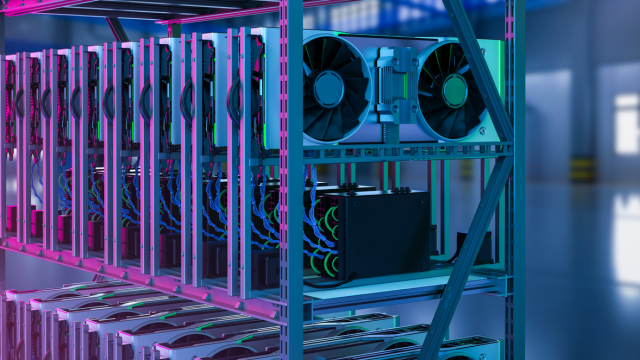
Clusters can start as small as three nodes with three GPUs and scale to hundreds of GPUs for production AI systems.
This guide compares the NVIDIA H200, NVIDIA H100, and NVIDIA L40S GPUs using a workload-driven decision matrix instead of a spec sheet.
GPU Comparison Overview
Core Architectural Differences
| GPU | Architecture | Memory | Memory Bandwidth | Primary Strength |
| H200 | Hopper | 141GB HBM3e | ~4.8 TB/s | Memory-heavy AI + HPC |
| H100 | Hopper | 80GB HBM3 | ~3.35 TB/s | Compute-heavy AI acceleration |
| L40S | Ada Lovelace | 48GB GDDR6 | Lower vs Hopper | Versatile AI + graphics |
At a high level:
H200 = memory-first
H100 = compute-first
L40S = versatile + cost-efficient
Decision Matrix: Which GPU Fits Your Workload?
-
Large Language Model (LLM) Training
| Scenario | Best Choice | Why |
| Training models >70B parameters | H200 | Larger HBM3e memory keeps more parameters on-GPU |
| Training 7B–40B models | H100 | High FP8 Tensor Core throughput |
| Small model experimentation | L40S | Lower cost, sufficient compute |
If you are memory-bound, H200 reduces inter-GPU communication overhead.
If you are compute-bound, H100 often delivers stronger cost-to-throughput efficiency.
-
AI Inference at Scale
| Scenario | Best Choice | Why |
| Large context window inference | H200 | Higher memory bandwidth reduces stalls |
| High-throughput API inference | H100 | Transformer Engine optimizes mixed precision |
| Edge / lightweight inference | L40S | Lower power draw, strong cost efficiency |
Inference environments are often less memory-constrained than training environments. That makes H100 a strong middle-ground choice for production AI APIs.
-
High Performance Computing (HPC)
| Scenario | Best Choice | Why |
| Memory-bound simulations | H200 | Higher bandwidth |
| Compute-bound simulations | H100 | Strong FP64 and Tensor throughput |
| Mixed AI + visualization | L40S | Combines compute + graphics |
For tightly coupled HPC workloads, multi-GPU scaling behavior matters more than raw TFLOPS.
-
Generative AI + Media + 3D Workloads
| Scenario | Best Choice | Why |
| Text + image generation | H100 | High mixed precision acceleration |
| AI + 3D rendering | L40S | Graphics + AI in one platform |
| Video encoding pipelines | L40S | Integrated media acceleration |
L40S shines in multi-workload environments that combine AI with rendering or media pipelines.
Cost-to-Performance Positioning
| GPU | Starting Monthly Price* | Ideal Buyer Profile |
| H200 | $1,800 | Enterprises training large models |
| H100 | $1,500 | Teams running production AI pipelines |
| L40S | $500 | Startups, SLM deployments, hybrid workloads |
*GPU hardware pricing only. Full systems include compute, storage, and networking.
For many organizations, the real question isn’t “which is fastest?” It’s:
Which GPU minimizes cost per useful training hour?
L40S often wins for small-model deployments.
H100 balances performance and economics.
H200 wins when memory ceilings become architectural bottlenecks.
Cluster Sizing Considerations
HorizonIQ can deploy:
- 3-GPU starter clusters for lightweight AI
- 8–32 GPU mid-scale clusters
- Hundreds of GPUs for large-scale AI systems
All deployments are single-tenant, eliminating noisy neighbors and shared PCIe contention.
This matters more than most teams realize.
In multi-tenant cloud environments, interconnect contention and thermal throttling can erode theoretical GPU advantages.
Dedicated infrastructure preserves:
- Deterministic memory bandwidth
- Stable NVLink performance
- Consistent thermal headroom
- Clear compliance boundaries
When Should You Choose Each GPU?
Choose H200 If:
- You’re training very large foundation models
- Memory is your primary bottleneck
- You want fewer GPUs per model replica
- You operate memory-heavy HPC workloads
Choose H100 If:
- You run production LLM pipelines
- You need balanced compute + memory
- You want strong FP8 acceleration
- You are scaling inference APIs
Choose L40S If:
- You deploy small language models
- You combine AI with graphics workloads
- You need cost-efficient generative AI
- You are piloting AI without full-scale investment
Public Cloud vs Dedicated GPU Infrastructure
| Scenario | Public Cloud GPU | Dedicated HorizonIQ Cluster |
| Bursty experimentation | Flexible | May be overprovisioned |
| 24/7 production AI | Variable cost | Predictable monthly pricing |
| Compliance-bound workloads | Shared tenancy | Single-tenant isolation |
| Long-term AI roadmap | OpEx volatility | Stable TCO planning |
If GPUs operate continuously, dedicated infrastructure often lowers long-term cost.
If workloads are unpredictable, elasticity can justify cloud pricing.
The key is utilization rate.
Frequently Asked Questions
Is H200 always better than H100?
Not always. H200 excels in memory-bound workloads. H100 can deliver better cost efficiency in compute-bound environments.
Is L40S powerful enough for LLM inference?
Yes, especially for small to mid-sized models. It is often ideal for SLM deployments and hybrid AI + graphics workloads.
Can I start small and scale later?
Yes. HorizonIQ can deploy clusters starting at three GPUs and scale to hundreds.
Do I need large upfront capital?
No. HorizonIQ offers predictable monthly pricing with no major upfront capital expense.
Final Decision Framework
Instead of asking “Which GPU is the most powerful?”
Ask yourself:
- Is my workload memory-bound or compute-bound?
- What is my expected GPU utilization rate?
- Do I need graphics acceleration?
- Am I training models or serving them?
- Do I need compliance isolation?
The right accelerator depends on workload maturity, duty cycle, and architectural constraints.